
You Might Be Exposed, Without You Even Knowing It.
Imagine this: you’re going about your day, logging into your email, checking work files, maybe even making a quick online purchase. Meanwhile, on the Dark Web, cybercriminals are buying and selling login credentials, maybe even yours.
Stolen credentials are one of the most valuable commodities for hackers, and if your passwords aren’t secure, your accounts could already be compromised.
So, how do you stay ahead of these threats? Let’s break it down.
Why the Dark Web is a Growing Threat
The Dark Web is an underground marketplace where cybercriminals trade stolen data, including usernames, passwords, and financial details. Once your credentials are out there, they can be used for:
- Identity theft
- Unauthorised access to personal and business accounts
- Financial fraud and ransomware attacks
81% of data breaches happen due to weak or stolen credentials. If you’re reusing passwords or neglecting cybersecurity best practices, you’re making it easy for hackers to strike.
5 Critical Steps to Protect Your Credentials
1. Stop Reusing Passwords. Use a Password Manager Instead
- Why? Hackers use credential stuffing, testing stolen passwords across multiple sites, to gain access to more accounts. If one password is breached, everything could be at risk.
- Solution: Use a password manager to generate and store unique, strong passwords for every account.
2. Enable Multi-Factor Authentication (MFA) Everywhere
- Why? Even if a hacker gets your password, MFA adds an extra layer of security, requiring a second verification step (e.g., a code from your phone).
- Solution: Activate MFA on all critical accounts, including email, banking, and work logins.
3. Stay Alert for Phishing Attacks
- Why? 90% of cyberattacks start with phishing, fraudulent emails that trick you into handing over credentials.
- Solution: Always double-check URLs and sender addresses before clicking on links. When in doubt, don’t click!
4. Regularly Check If Your Credentials Have Been Leaked
- Why? Many people don’t realise their passwords have already been exposed.
- Solution: Use sites like Have I Been Pwned to check if your accounts have been compromised.
5. Work With a Cybersecurity Expert
- Why? Cybercriminals constantly evolve their tactics. A dedicated cybersecurity provider ensures your business stays ahead of threats.
- Solution: Solution: Get expert advice on password security, threat monitoring, and incident response.
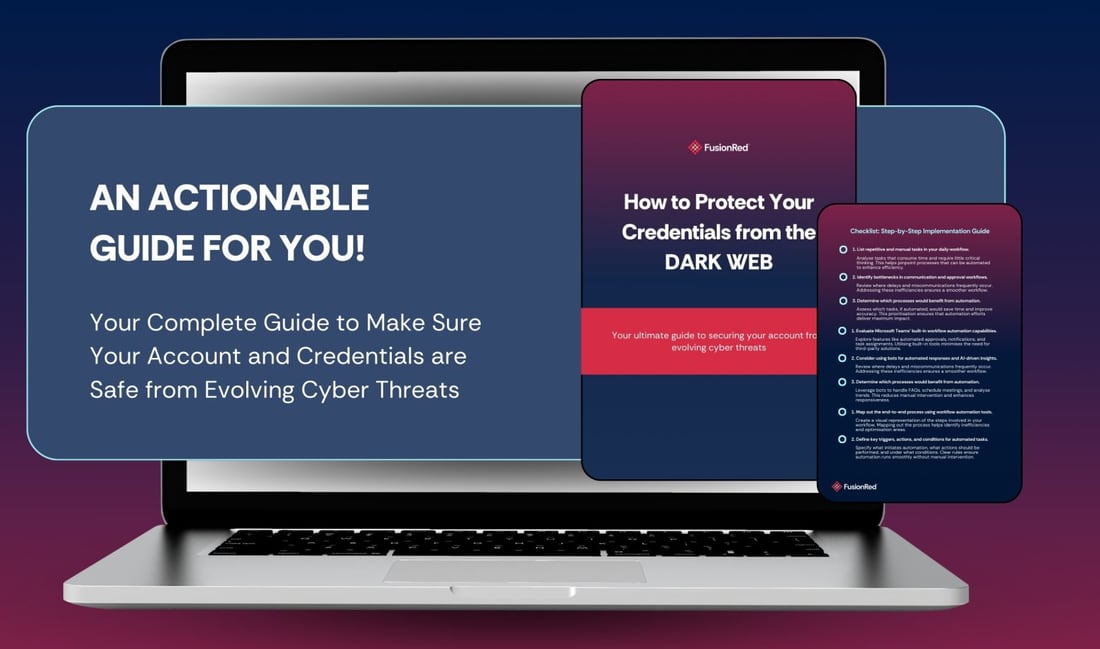
Make it Easier With Our Free Guide!
Inside the Account Security Guide, you’ll discover:
- Checklist to strengthen your passwords and prevent credential theft
- Best practices for implementing multi-factor authentication (MFA)
- Proven strategies to detect and avoid phishing scams
- Assistance for taking action
Conclusion
Protecting your credentials isn’t just about avoiding cyber threats, it’s about taking control of your digital security. By implementing the right practices, staying informed, and leveraging expert guidance, you can safeguard your accounts from ever-evolving cyber risks. Start securing your future today.