Leave The Manual Business Tasks
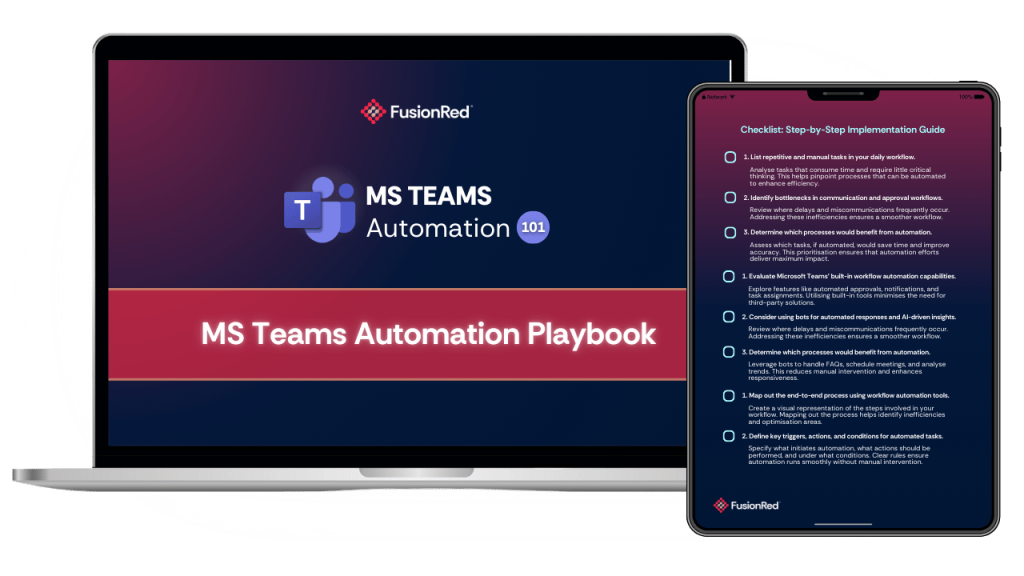
Download our MS Teams Automation Playbook!
Tired of wasting time on repetitive tasks in Microsoft Teams? Unlock the power of automation and take your business efficiency to the next level!
Download our free MS Teams Automation Playbook: Your step-by-step playbook to streamlining workflows, reducing errors, and boosting productivity.
Business efficiency is key. Download your free guide now!
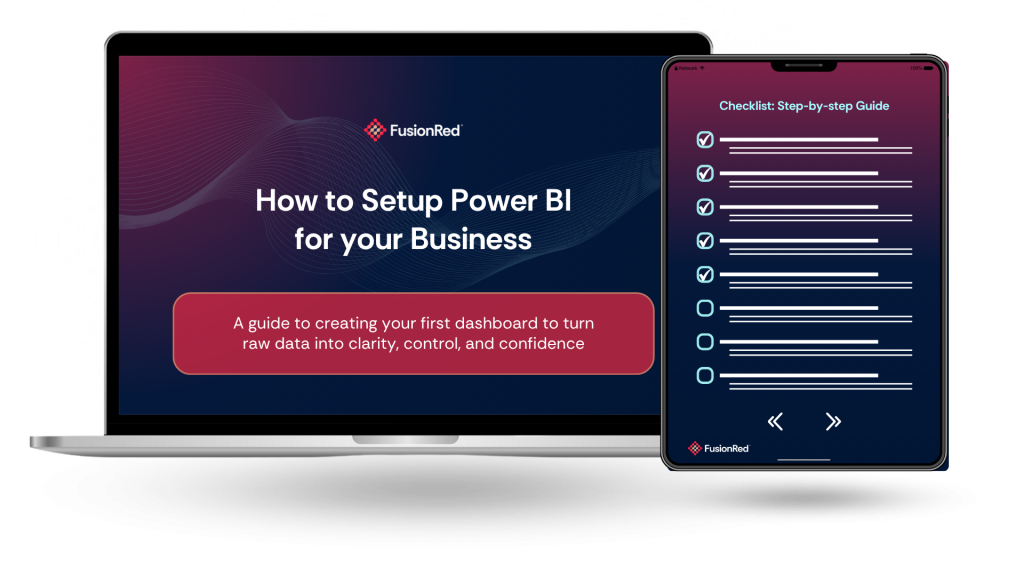
Turn Your Data into Live Dashboards!
This free guide is designed for small to medium business leaders who want to stop relying on manual excel/spreadsheets and start making data-driven decisions.
Inside, you’ll find a clear, practical roadmap to install, connect, visualise, and share dashboards (with bonus tips to scale wisely). Use it to accelerate your Power BI deployment, avoid common pitfalls, and turn your business into an insight-driven machine.
What You’ll Get:
- How to install Power BI Desktop and connect it to your existing business data sources
- The essential steps to clean, model, and relate your data for accuracy
- How to build engaging visuals and dashboards tailored for your team
- How to publish reports, set up auto-refresh, and share dashboards securely
- Bonus tactics to scale your deployment, protect your data, and drive adoption
- A ready checklist to avoid setup gaps and get your dashboards live fast
Don’t stay trapped in reactive reporting. Your data deserves clarity, and your decisions deserve confidence.
Introduction
Most business owners did not start their business to spend their time sorting out spreadsheets. But here they are every month, buried in Excel files, chasing missing numbers, and trying to make sense of reports that take forever to assemble.
If you feel like your business is drowning in spreadsheets, you are not alone. Most SMBs rely on Excel to track sales, finances, operations, staffing, and almost everything else. It works at first, but as the business grows, Excel becomes harder to manage.
The challenge is not the data. You already have plenty of it. The real problem is visibility.
-
Reports take too long to build
-
Teams use different versions of the same file
-
Decisions rely on gut feel
-
Monthly reporting eats up valuable time
Inside Microsoft 365, there is a tool built to solve these problems: Power BI. This blog breaks down what Power BI is, why SMBs should care, and how you can use it to get clarity without complexity.
The Real Problem SMBs Face With Spreadsheets
Traditional reporting looks like this: someone collects numbers from different files, cleans them, arranges them, builds charts, and sends a report. By the time it reaches the decision-maker, the information is already old.
This creates several hidden drains:
-
Time loss: manual reporting consumes hours or days
-
Delayed visibility: leaders wait until month end for clarity
-
Disconnected data: every department has separate files
-
Mistakes: version errors and missing data create unreliable numbers
-
Stress: decisions rely on gut feel
In our 20+ years of partnering up with businesses, we see this pattern across Australia’s SMB landscape. The tools and data are there, but clarity is missing.
What is Power BI? (Explained Simply)
To put it simply, Power BI is Microsoft’s data visualization tool that turns spreadsheets into live dashboards. If Excel records numbers, Power BI helps you understand them.
What Power BI actually does:
-
Connects your data from Excel, SharePoint, Teams, CRMs, POS, and more
-
Updates dashboards automatically
-
Shows your business at a glance
-
Fits within Microsoft 365
-
Removes manual reporting
Power BI is not a complex system. It is a clarity tool you already own in your Microsoft ecosystem.
Everyday Use Cases for Business
Most SMBs already collect plenty of data through daily operations, but the challenge is turning that information into something clear and usable. Power BI gives every department a way to see what is happening in real time, instead of relying on scattered files and manual reports. Here is how different parts of a business can benefit.
1. Sales
Sales teams rely on clear and timely insight to know whether they are on track, where opportunities are growing, and where attention is needed. Before Power BI, most of this visibility comes from scattered reports that arrive too late to influence daily decisions. With Power BI, sales managers and business owners get a live and reliable view of what is happening right now, not last week. This includes:
-
Live revenue tracking
-
Team performance
-
Pipeline insights
2. Finance
For finance teams, accuracy and timing matter. They need a clean view of cash flow, spending, and budgets to guide leadership decisions. Instead of reconciling different spreadsheets or waiting for updated files, Power BI brings all financial data into a single source of truth that updates automatically. With this, finance teams gain clearer visibility through:
-
Cash flow visibility
-
Expense tracking
-
Budget vs actual comparisons
3. Operations
Operations depend on smooth processes, timing, and predictable workloads. When information lives in separate systems or spreadsheets, delays and bottlenecks become harder to see. Power BI helps operations teams get ahead of issues by revealing trends and workload patterns as they happen. Some of the insights they gain include:
-
Stock levels
-
Service delivery metrics
-
Team workloads
4. Management
Executives and business owners need clarity without digging through multiple reports. Power BI provides a consolidated, high level view of the entire organisation so leaders can make confident decisions supported by live insights. This gives management access to:
-
One dashboard for all KPIs
-
Clear view of strengths and bottlenecks
-
Better planning and forecasting
These scenarios were demonstrated in our educational video about Power BI, showing how powerful simple changes can be. (Watch the full video here)
Breaking the Myths About Power BI
Myth 1: It is only for big companies
False. SMBs use it daily.
Myth 2: It is complicated
You can start by connecting Excel. No coding needed.
Myth 3: It is expensive
Many Microsoft 365 plans already include access.
Myth 4: It takes a long time to implement
Simple dashboards can be built within minutes.
Here at FusionRed, our goal is to help your business make the most of your Microsoft ecosystem, and help you remove the fear around tools & softwares like Power BI, and finally make it approachable for you and your team.
Make it Easier with Our FREE Downloadable Guide
Ready to bring Power BI into your business but don’t know where to begin?
That’s exactly why we created How to Set Up Power BI for Your Business, a free guide designed to help you create your first dashboard without the confusion or steep learning curve.
Inside the guide, you’ll discover:
-
How to connect Power BI to the data you already have
-
Practical steps to build a clean and simple dashboard
-
Tips for turning raw numbers into meaningful insights
-
Ways to reduce manual reporting and improve visibility across your team
Download your free guide today and start transforming your data into live & modern dashboards!

FAQs
Question: Why do SMBs struggle to make sense of their data?
Answer: Most SMBs rely on spreadsheets that were never designed to support fast moving teams. When numbers live in separate files and reports need manual work every month, leaders lose visibility and miss opportunities for growth.
Question: Do I need new software to start using Power BI?
Answer: Not necessarily. Many SMBs already have access to Power BI through Microsoft 365. The key is learning how to connect and visualise the data you already have, instead of adding more tools.
Question: How does Power BI actually help my team?
Answer: Power BI removes repetitive reporting tasks and eliminates the need for manual consolidation. Your team gains more time to focus on meaningful work, while leaders get instant clarity from live dashboards.
Question: Is Power BI too technical for non IT teams?
Answer: No. You can start by connecting an Excel file and choosing simple visuals. The recorded session shows that even first time users can build a clean dashboard in minutes.
Question: How do I know if my business is ready for Power BI?
Answer: If your reporting is slow, if your team works with multiple versions of the same file, or if your decisions rely on outdated information, it is a strong sign you are ready for a more modern reporting setup.
Final Thoughts: Move Toward Clarity
Power BI gives businesses the visibility and control needed to make decisions with confidence using their business data. You do not need a technical background or a long list of new tools. You just need a clear way to turn your existing data into something useful.
If your current reporting feels heavy or disconnected, now is the time to rethink how your business handles data.
Make it Happen Today
Book a free consultation with FusionRed and discover how to build a tech system that brings clarity, confidence, and scalability to your business.