Evaluate Your Website Security and Protect Your Business from Cyber Threats
Download Website Security Assessment Guide!
Your website is one of the most important digital assets your business owns, but it is also one of the most common entry points for cyber attacks, malware infections, and data breaches.
The good news is that most website security risks are preventable when the right cybersecurity foundation is in place.
Download the Website Security Assessment Guide and take the first step toward protecting your website, securing your digital infrastructure, and reducing cyber security risks.
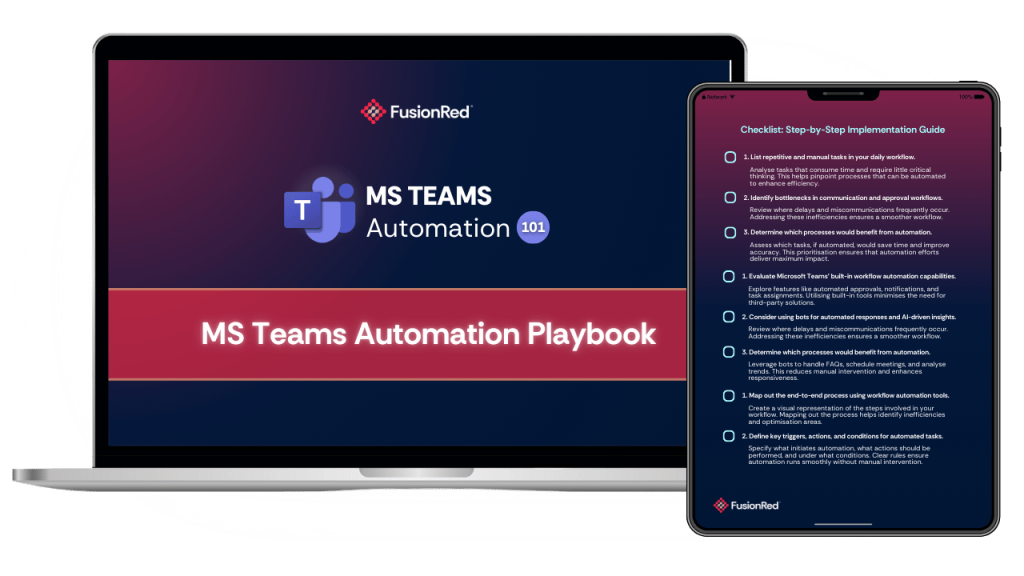
Leave The Manual Business Tasks
Download our MS Teams Automation Playbook!
Tired of wasting time on repetitive tasks in Microsoft Teams? Unlock the power of automation and take your business efficiency to the next level!
Download our free MS Teams Automation Playbook: Your step-by-step playbook to streamlining workflows, reducing errors, and boosting productivity.
Business efficiency is key. Download your free guide now!
Turn Your Data into Live Dashboards!
This free guide is designed for small to medium business leaders who want to stop relying on manual excel/spreadsheets and start making data-driven decisions.
Inside, you’ll find a clear, practical roadmap to install, connect, visualise, and share dashboards (with bonus tips to scale wisely). Use it to accelerate your Power BI deployment, avoid common pitfalls, and turn your business into an insight-driven machine.
What You’ll Get:
- How to install Power BI Desktop and connect it to your existing business data sources
- The essential steps to clean, model, and relate your data for accuracy
- How to build engaging visuals and dashboards tailored for your team
- How to publish reports, set up auto-refresh, and share dashboards securely
- Bonus tactics to scale your deployment, protect your data, and drive adoption
- A ready checklist to avoid setup gaps and get your dashboards live fast
Don’t stay trapped in reactive reporting. Your data deserves clarity, and your decisions deserve confidence.
Introduction
Most business owners did not start their business to spend their time sorting out spreadsheets. But here they are every month, buried in Excel files, chasing missing numbers, and trying to make sense of reports that take forever to assemble.
If you feel like your business is drowning in spreadsheets, you are not alone. Most SMBs rely on Excel to track sales, finances, operations, staffing, and almost everything else. It works at first, but as the business grows, Excel becomes harder to manage.
The challenge is not the data. You already have plenty of it. The real problem is visibility.
-
Reports take too long to build
-
Teams use different versions of the same file
-
Decisions rely on gut feel
-
Monthly reporting eats up valuable time
Inside Microsoft 365, there is a tool built to solve these problems: Power BI. This blog breaks down what Power BI is, why SMBs should care, and how you can use it to get clarity without complexity.
The Real Problem SMBs Face With Spreadsheets
Traditional reporting looks like this: someone collects numbers from different files, cleans them, arranges them, builds charts, and sends a report. By the time it reaches the decision-maker, the information is already old.
This creates several hidden drains:
-
Time loss: manual reporting consumes hours or days
-
Delayed visibility: leaders wait until month end for clarity
-
Disconnected data: every department has separate files
-
Mistakes: version errors and missing data create unreliable numbers
-
Stress: decisions rely on gut feel
In our 20+ years of partnering up with businesses, we see this pattern across Australia’s SMB landscape. The tools and data are there, but clarity is missing.
What is Power BI? (Explained Simply)
To put it simply, Power BI is Microsoft’s data visualization tool that turns spreadsheets into live dashboards. If Excel records numbers, Power BI helps you understand them.
What Power BI actually does:
-
Connects your data from Excel, SharePoint, Teams, CRMs, POS, and more
-
Updates dashboards automatically
-
Shows your business at a glance
-
Fits within Microsoft 365
-
Removes manual reporting
Power BI is not a complex system. It is a clarity tool you already own in your Microsoft ecosystem.
Everyday Use Cases for Business
Most SMBs already collect plenty of data through daily operations, but the challenge is turning that information into something clear and usable. Power BI gives every department a way to see what is happening in real time, instead of relying on scattered files and manual reports. Here is how different parts of a business can benefit.
1. Sales
Sales teams rely on clear and timely insight to know whether they are on track, where opportunities are growing, and where attention is needed. Before Power BI, most of this visibility comes from scattered reports that arrive too late to influence daily decisions. With Power BI, sales managers and business owners get a live and reliable view of what is happening right now, not last week. This includes:
-
Live revenue tracking
-
Team performance
-
Pipeline insights
2. Finance
For finance teams, accuracy and timing matter. They need a clean view of cash flow, spending, and budgets to guide leadership decisions. Instead of reconciling different spreadsheets or waiting for updated files, Power BI brings all financial data into a single source of truth that updates automatically. With this, finance teams gain clearer visibility through:
-
Cash flow visibility
-
Expense tracking
-
Budget vs actual comparisons
3. Operations
Operations depend on smooth processes, timing, and predictable workloads. When information lives in separate systems or spreadsheets, delays and bottlenecks become harder to see. Power BI helps operations teams get ahead of issues by revealing trends and workload patterns as they happen. Some of the insights they gain include:
-
Stock levels
-
Service delivery metrics
-
Team workloads
4. Management
Executives and business owners need clarity without digging through multiple reports. Power BI provides a consolidated, high level view of the entire organisation so leaders can make confident decisions supported by live insights. This gives management access to:
-
One dashboard for all KPIs
-
Clear view of strengths and bottlenecks
-
Better planning and forecasting
These scenarios were demonstrated in our educational video about Power BI, showing how powerful simple changes can be. (Watch the full video here)
Breaking the Myths About Power BI
Myth 1: It is only for big companies
False. SMBs use it daily.
Myth 2: It is complicated
You can start by connecting Excel. No coding needed.
Myth 3: It is expensive
Many Microsoft 365 plans already include access.
Myth 4: It takes a long time to implement
Simple dashboards can be built within minutes.
Here at FusionRed, our goal is to help your business make the most of your Microsoft ecosystem, and help you remove the fear around tools & softwares like Power BI, and finally make it approachable for you and your team.
Make it Easier with Our FREE Downloadable Guide
Ready to bring Power BI into your business but don’t know where to begin?
That’s exactly why we created How to Set Up Power BI for Your Business, a free guide designed to help you create your first dashboard without the confusion or steep learning curve.
Inside the guide, you’ll discover:
-
How to connect Power BI to the data you already have
-
Practical steps to build a clean and simple dashboard
-
Tips for turning raw numbers into meaningful insights
-
Ways to reduce manual reporting and improve visibility across your team
Download your free guide today and start transforming your data into live & modern dashboards!
FAQs
Question: Why do SMBs struggle to make sense of their data?
Answer: Most SMBs rely on spreadsheets that were never designed to support fast moving teams. When numbers live in separate files and reports need manual work every month, leaders lose visibility and miss opportunities for growth.
Question: Do I need new software to start using Power BI?
Answer: Not necessarily. Many SMBs already have access to Power BI through Microsoft 365. The key is learning how to connect and visualise the data you already have, instead of adding more tools.
Question: How does Power BI actually help my team?
Answer: Power BI removes repetitive reporting tasks and eliminates the need for manual consolidation. Your team gains more time to focus on meaningful work, while leaders get instant clarity from live dashboards.
Question: Is Power BI too technical for non IT teams?
Answer: No. You can start by connecting an Excel file and choosing simple visuals. The recorded session shows that even first time users can build a clean dashboard in minutes.
Question: How do I know if my business is ready for Power BI?
Answer: If your reporting is slow, if your team works with multiple versions of the same file, or if your decisions rely on outdated information, it is a strong sign you are ready for a more modern reporting setup.
Final Thoughts: Move Toward Clarity
Power BI gives businesses the visibility and control needed to make decisions with confidence using their business data. You do not need a technical background or a long list of new tools. You just need a clear way to turn your existing data into something useful.
If your current reporting feels heavy or disconnected, now is the time to rethink how your business handles data.
Make it Happen Today
Book a free consultation with FusionRed and discover how to build a tech system that brings clarity, confidence, and scalability to your business.
“Why does it feel like we’re always patching problems instead of building a business that runs smoothly?”
That’s the silent frustration many SMB leaders face. Growth should be exciting, but behind the scenes it can feel messy—manual processes slow teams down, disconnected tools create constant errors, and leaders spend more time firefighting than strategising.
The truth is, the way you manage your systems today will determine whether your business scales sustainably or hits a wall. When operations feel clunky, your team burns out, and your growth potential stalls.
Introduction
SMBs are the backbone of Australia’s economy, but many leaders hit the same roadblock: their tools, systems, and processes can’t keep up with their ambition. Manual workarounds, duplicated effort, and scattered data make growth harder than it needs to be.
The following sections breaks down how smarter systems can help you overcome this barrier, plus additional insights to help you rethink your approach to scaling.
The Hidden Cost of Bad Systems
If you think bad systems are just minor issues, think again. You might be draining your business operations and your team productivity. The worst part? You’re preventing your business from scaling (and letting your competitors get ahead of you).
Here are the real costs of bad systems:
- Lost Productivity: Every duplicated task or manual workaround is wasted time that compounds daily.
- Team Burnout: Manual workloads and reactive fixes drain morale and energy.
- Missed Opportunities: When systems don’t provide visibility, leaders make slower or riskier decisions.
- Financial Strain: Investing in patches instead of strategy increases long-term costs.
Research from Xero shows that inefficient operations cost Australian SMBs thousands of productive hours annually—time that could otherwise fuel growth.
What Smarter Systems Look Like (Explained Simply)
Smarter systems are not about buying more tools. They’re about creating a tech ecosystem that scales with you.
Here’s what it means in practice:
Automation: Repetitive tasks are handled in the background so your team can focus on high-value work.
Integration: Your tools “talk” to each other, reducing errors and duplication.
Visibility: Leaders have real-time access to the data that matters.
Roadmap: IT spend and system decisions are tied to business strategy, not just fixes.
Cybersecurity: Protection is embedded, so growth doesn’t expose new risk
Real Business Impact – How Tech Systems Unlock Growth
When systems are aligned to business strategy, the results are immediate and tangible:
Less Chaos: Downtime drops, staff focus improves.
Predictable Growth: With a roadmap in place, leaders stop firefighting.
Empowered Teams: People spend less time on admin and more on value-driving work.
Better Decisions: Real-time visibility means leaders make smarter calls at speed.
Sustainable Scaling: Growth doesn’t come at the cost of staff wellbeing or client trust.
Businesses that have invested in integration and automation often see both reduced errors and higher team morale within months.
How to Choose the Right Approach (or Provider)
Not every system or solution is equal. When choosing your approach (or a partner to help), you should look for:
Business Alignment: Do they understand your growth goals, not just your IT needs?
Proactivity: Are issues prevented before they disrupt operations?
Integration First: Is the focus on connecting tools, not adding more complexity?
Local Understanding: Do they know the challenges SMBs face in your market?
Security Built-In: Growth should not increase cyber risk.
The best approach is a business-first, security-driven strategy. It’s not about technology for technology’s sake, it’s about creating clarity, control, and confidence for leaders.
Make it Easier with Our FREE Downloadable Guide
Ready to start modernising but not sure where to begin?
We’ve created How to Build Systems that Scale, a free downloadable guide to help you take the first steps to scaling smarter, no technical background required.
Inside the guide, you’ll discover:
Practical ways to streamline operations using tools you already have
Tips to boost collaboration, automate routine work, and strengthen security
Easy-to-follow instructions on implementing changes within your team
Download your free guide today! Stop running your business on outdated systems. Start creating workflows that save time, reduce risk, and support your growth.

FAQs
Question: Why do SMBs struggle to scale effectively?
Answer: Most SMBs rely on systems that weren’t designed to handle rapid growth. Manual processes, disconnected tools, and lack of visibility make operations harder to manage as the business expands.
Question: Do I need new software to scale smarter?
Answer: Not always. Often it’s about integrating and automating the tools you already use. The goal is to create a connected ecosystem, not just add more software.
Question: How does automation really help my team?
Answer: Automation reduces repetitive, manual tasks like data entry or approvals. This frees up your team to focus on more valuable work, boosting productivity and morale.
Question: What role does cybersecurity play in scaling?
Answer: Every new tool or process introduces potential risk. Embedding cybersecurity into your systems ensures growth doesn’t come with vulnerabilities that could harm your business.
Question: How do I know when it’s time to rethink my systems?
Answer: If your team is constantly overwhelmed, if errors are increasing, or if leaders are spending more time fixing issues than planning strategy, it’s a clear sign your systems need an upgrade.
Final Thoughts: Scale the Right Way
Scaling doesn’t need to feel chaotic. The right systems give you visibility, control, and a confident path forward—without exhausting your people or leaving gaps in your business.
If your current operations feel like they’re “held together with duct tape,” now is the time to rethink your systems.
Make it Happen Today
Book your free consultation with FusionRed today and discover how to build systems that scale with clarity and resilience.
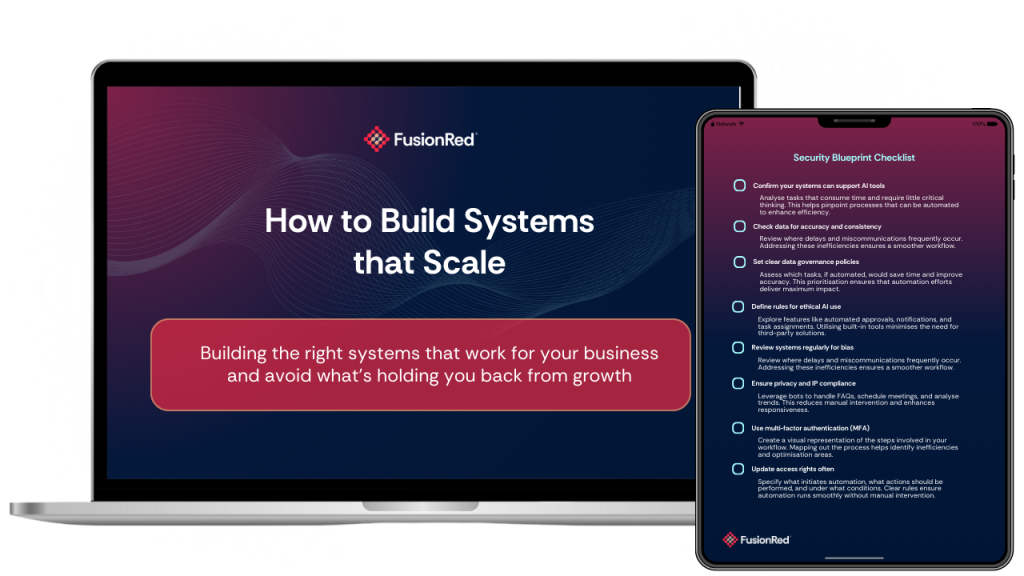
Are Your Business Systems Holding You Back from Scaling?
Fast-growing SMBs often hit a wall because their systems can’t keep up. The How to Build Systems That Scale guide gives business leaders a clear, actionable framework to streamline operations, integrate tools, and eliminate the inefficiencies slowing growth. Protect your team from burnout, improve decision-making with real-time data, and create a sustainable operating model that adapts as you expand.
What You’ll Get From This Guide:
- Step-by-Step Framework: Proven process to design systems that grow with your business.
- Integration Insights: How to connect tools for better visibility and efficiency.
- Automation Tips: Free up team bandwidth by eliminating repetitive tasks.
- Scalability Essentials: Build a foundation that supports future growth.
- Leadership Clarity: Shift from daily firefighting to strategic decision-making.
Don’t let outdated systems cap your growth potential. Get your free guide today and start building systems that work as hard as you do.
“If my team already has Microsoft 365, why do our operations still feel stuck in the past?”
That’s the question many business leaders ask themselves. They see their competitors moving faster, collaborating better, and handling change without panic—meanwhile, their own teams are stuck chasing approvals in endless email chains, or digging through old versions of files. The truth is, most SMBs already have the tools to work smarter. They’re just not using them in the right way.
This blog shows you how to turn Microsoft 365 into your competitive advantage, and finally modernise how your team works, communicates, and stays protected.
Introduction
For most small to mid-sized businesses, operational inefficiencies are the silent killers of productivity. Employees waste time hunting for files. Team collaboration gets buried in fragmented email threads. And manual, repetitive tasks keep piling up.
Yet there’s a clear shift in today’s business landscape: smarter companies are winning not by working harder, but by modernising how they operate.
This blog breaks down how SMBs can streamline operations, boost team efficiency, and safeguard business continuity using the powerful (yet often underutilised) tools already within Microsoft 365.
Let’s turn Microsoft 365 from just a subscription into a business game-changer.
What’s Slowing Down Your Business?
Most businesses operate with band-aid systems: scattered file sharing, siloed communication, repetitive tasks handled manually, and tools that don’t talk to each other.
Common problems we hear from SMBs:
“My team is always chasing approvals.”
“We don’t have a centralised place to work.”
“Everyone works differently—nothing is standardised.”
“I’m worried what happens if someone clicks the wrong email.”
These issues are costing you more than just time. They’re impacting:
Productivity: Teams can’t work efficiently if they’re bogged down with friction.
Team morale: Frustration builds when things are harder than they need to be.
Business continuity: One ransomware attack or accidental file loss can halt everything.
So, what are top-performing businesses doing differently? They’ve systemised their operations, and they’re using Microsoft 365 to do it.
What Is Microsoft Bookings?
Microsoft Bookings is an online appointment scheduling tool, included with most Microsoft 365 subscriptions. It lets your clients book time directly into your team’s calendar, based on real-time availability, no emails required.
Key Features:
- Real-Time Scheduling: Clients can see when you’re free and book instantly.
- Automatic Reminders: Reduces no-shows with email and SMS notifications.
- Integration: Syncs with Microsoft Outlook and Teams calendars.
- Customisable Booking Pages: Tailor the booking experience to your brand and business needs.
- Staff Assignments: Set up staff availability, let clients pick a team member, or have Bookings auto-assign.
- Data Security: Built-in with Microsoft 365, so your information stays secure.
How It Works (Simple Flow):
- Set up your services and staff availability in Bookings.
- Share your unique booking page with clients or prospects.
- They select a time that works for them, based on your real availability.
- You both get instant confirmation—and Bookings adds it to your Outlook/Teams calendar.
- Bookings sends automated reminders before the appointment.
Why SMBs Overlook It: Many SMBs don’t realise Bookings is included with their existing Microsoft 365 subscription, or they underestimate the value of scheduling automation.
Unlocking the Full Potential of Microsoft 365
Most business leaders only scratch the surface of Microsoft 365. But beyond the familiar apps lies a powerhouse suite of tools designed to modernise operations.
Here’s what the smart players are leveraging:
- Teams + SharePoint
Centralised communication and document management. Replace endless email threads with structured, transparent collaboration. Teams becomes your digital HQ. - Power Automate
Eliminate repetitive admin work. Automate document approvals, notifications, scheduling, and more. What once took hours now happens in the background. - Microsoft Forms
Streamline data collection for customer feedback, internal surveys, and project intake. No more back-and-forths or disjointed spreadsheets. - OneDrive + Version Control
Access files anytime, anywhere, with confidence. Files are backed up, synced, and trackable, protecting you from human error or ransomware. - Microsoft Defender for Business
Security built in. Protect your business from phishing, malware, and device compromise, all managed from a single admin centre.
This is how modern businesses are building resilience, consistency, and clarity, without needing to buy new software.
What Top Companies Do Differently (That You Can Too)
Smart companies don’t wait for things to break. They proactively design systems that make work easier, faster, and safer.
Here’s what they get right:
Standardised workflows: Everyone works the same way, reducing confusion.
Automated approvals and notifications: Work flows smoothly without bottlenecks.
Remote-ready infrastructure: Teams can work from anywhere without disruptions.
Security-first mindset: Phishing protection, access controls, and endpoint security are embedded into the way they work.
These businesses aren’t necessarily tech experts. They just use what they already have—strategically. And so can you.
Make it Easier with Our FREE Downloadable Guide
Ready to start modernising, but not sure where to begin?
We’ve created a free downloadable guide to help you take the first steps to modernising your operations using Microsoft 365—no technical background required.
Inside the guide, you’ll discover:
Practical ways to streamline operations using tools you already have
Tips to boost collaboration, automate routine work, and strengthen security
Easy-to-follow instructions on implementing changes within your team
Download your free guide today! Stop running your business on outdated systems. Start creating workflows that save time, reduce risk, and support your growth.
FAQs
Question: Do I need to buy anything new to start modernising?
Answer: No. Everything discussed in this blog is already part of most Microsoft 365 Business subscriptions. And if you don’t have it yet, you can still do it using other alternatives!
Question: Isn’t this too complicated for a small team?
Answer: Modernising isn’t about adding complexity. It’s about removing friction. These tools simplify your operations (regardless of your business size)
Question: Will I need IT staff to manage this?
Answer: Not necessarily. With the right setup and guidance, these tools run quietly in the background. Our free downloadable guide can help you achieve just that!
Final Thoughts: Modernisation is Easier than you Think
You don’t need to keep putting out IT fires or chasing productivity through sheer effort.
Modernisation isn’t out of reach. With the right strategy, guide, and Microsoft 365, you can build systems that support your team, protect your business, and scale your business the modern way!
Let FusionRed help you make it happen.
Book a free consultation with FusionRed. Let’s explore how you’re currently using Microsoft 365 (or not using it enough), and we’ll give you a tailored plan on how to modernise your business using the tools you already have.
“You didn’t build your business to worry about hackers—but somehow, you’re the one staying up at night wondering if your systems are safe.”
This is the reality for many small to mid-sized business owners like Anthony from Parramatta. He’s great at running his business, but when news breaks about another local SME falling victim to a ransomware attack, his confidence wavers. He thinks: “If those companies got breached, what makes us any safer?”
Anthony doesn’t have a full cybersecurity team. He has a basic antivirus, a backup plan (sort of), and a lot of crossed fingers. Meanwhile, the threats keep evolving—phishing scams, supply chain breaches, insider risks. But what if the same tools and strategies used by top-performing corporations were not just available to SMBs—but made easy to deploy?
Introduction
You’re a business owner, not a cybersecurity expert. But somehow, you’re the one constantly wondering:
Are we safe from ransomware?
Would we even know if our systems were breached?
Why do some SMBs never seem to get hit?
The truth is, many small businesses rely on default protections, basic antivirus software, or outsourced IT support that only reacts after something breaks. Meanwhile, top-performing businesses—both large and small—use strategic, layered security frameworks to stay protected.
This isn’t just about fancy tech. It’s about peace of mind. In our latest FusionTalk (as seen on the video above), we unpacked the strategies used by successful corporations and elite SMBs to defend against cyber threats.
The Silent Risk – Why Basic Security Isn’t Enough
Most SMBs operate under a dangerous assumption: “If we haven’t been breached yet, we must be doing something right.”
But here’s the problem:
Default antivirus is not enough.
Your outsourced IT team might not be monitoring threats 24/7.
Backups may not be tested or even recoverable.
Employee awareness training is often skipped or ineffective.
The result:
Downtime when ransomware strikes.
Lost data after a simple phishing attack.
Legal and financial exposure after a breach.
The silent killer is false confidence. You think you’re safe, until you’re not. And by the time you realise it, your systems are locked, your data is gone, and your customers are questioning your credibility.
What Top Companies Do Differently (That You Can Too)
Top-performing companies don’t wait for an attack to happen. They build a resilient defence using layers of security. Here’s what their strategy typically includes:
1. Identity and Access Management
Use multi-factor authentication (MFA) across all business accounts.
Ensure employees don’t reuse weak passwords or share credentials.
Implement role-based access—only give staff the access they truly need.
2. Endpoint Detection and Response (EDR)
Monitor all devices (laptops, mobile, desktops) for real-time threats.
Detect and isolate suspicious activity before it spreads.
3. Automated Patch Management
Keep all systems up to date with critical security patches.
Prevent zero-day vulnerabilities from being exploited.
4. Email Threat Protection
Advanced filtering to block phishing, spoofing, and malware-laced emails.
Educate staff with simulated phishing campaigns to boost awareness.
5. Data Backup and Recovery
Encrypted, cloud-based backups tested regularly.
Fast recovery in case of disaster or ransomware.
6. Security Monitoring and Response
24/7 system monitoring with automated threat alerts.
Incident response playbooks tailored for the business.
Make it Easier with Our FREE Downloadable Guide
Ready to put these strategies into action for your own business?
Our free downloadable Security Blueprint QuickStart Guide makes it easy for SMBs to get started with a proven framework. It is designed to help business owners and IT leads build foundational protections with clarity and speed—no technical expertise required.
Download the guide to discover:
The core steps to building a layered security posture
The must-have configurations top-performing businesses rely on
A checklist of critical controls for ransomware resilience, data protection, and threat monitoring
Practical recommendations to reduce downtime and increase compliance
The guide has helped many businesses start securing their digital environment with confidence. Now it’s your turn.
Download your free copy and start implementing your enterprise-grade cybersecurity foundation today.
FAQs
Question: What is the Security Blueprint QuickStart Guide and how can it help me?
Answer: It’s a free downloadable checklist that walks SMBs through key steps to strengthen their cybersecurity posture—using Microsoft-native tools you may already have. It’s designed for clarity, action, and real-world application.
Question: Do I need a dedicated IT team to implement this free guide?
Answer: No. The guide was built for SMBs without internal IT staff. It provides practical steps that any business owner or generalist can follow.
Question: Is this guide suitable for non-technical business owners?
Answer: Yes. The checklist uses clear, jargon-free language and simple action items that are easy to understand and implement.
Question: What tools are required to follow the guide?
Answer: The guide references Microsoft tools, but other alternatives that are publicly available can still do the job!
Question: How can I tell if our business needs this high-level of cybersecurity?
Answer: If you’re handling sensitive data, relying on remote work, or simply want to avoid disruption from ransomware or phishing, then yes—these steps are essential.
Conclusion
Cybersecurity should not be a mystery or a luxury. The tools are there, the strategies are known, so what’s missing? It’s execution. Take your first step towards securing your business’ future today using our free guide, and make your business’ cybersecurity indestructible!
Want to Take Action Without the Overwhelm?
If you are ready to protect your business like the top performers do (without the overwhelm), book a free consultation with FusionRed. Let’s build your indestructible cybersecurity blueprint together!
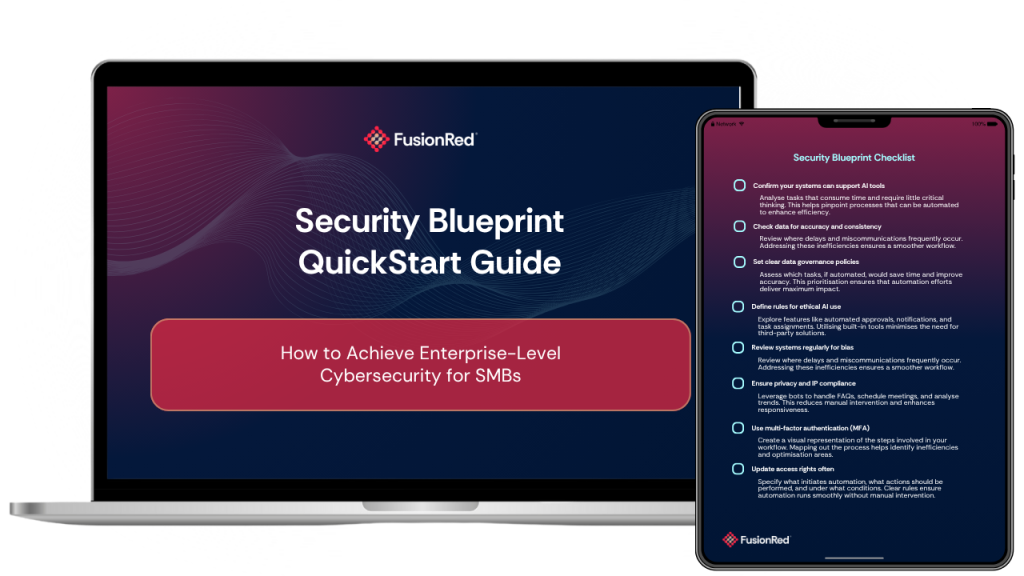
Is Your SMB as Secure as the Top Corporations?
SMBs are increasingly targeted by cybercrime due to their high vulnerabilities. The Security Blueprint QuickStart Guide equips business leaders with a strategic checklist to build robust cybersecurity foundations similar to what top-performing corporations have. Safeguard your critical assets, maintain client trust, and stay ahead of potential breaches by implementing proven cybersecurity measures today.
What You’ll Get From This Guide:
Step-by-step Checklist: Simple, actionable steps to immediately strengthen your cybersecurity posture.
Expert-Recommended Strategies: Leverage proven methods used by leading companies.
Practical Tips: Easily implementable actions without needing extensive technical expertise.
Insider Insights: Understand the cybersecurity essentials SMBs often overlook.
- Preparedness & Response: Enhance your readiness to swiftly tackle emerging cyber threats.
Don’t wait for a cyber attack to expose weaknesses in your system. Get your Security Blueprint QuickStart Guide, and take the first vital step towards securing your business like industry leaders do.
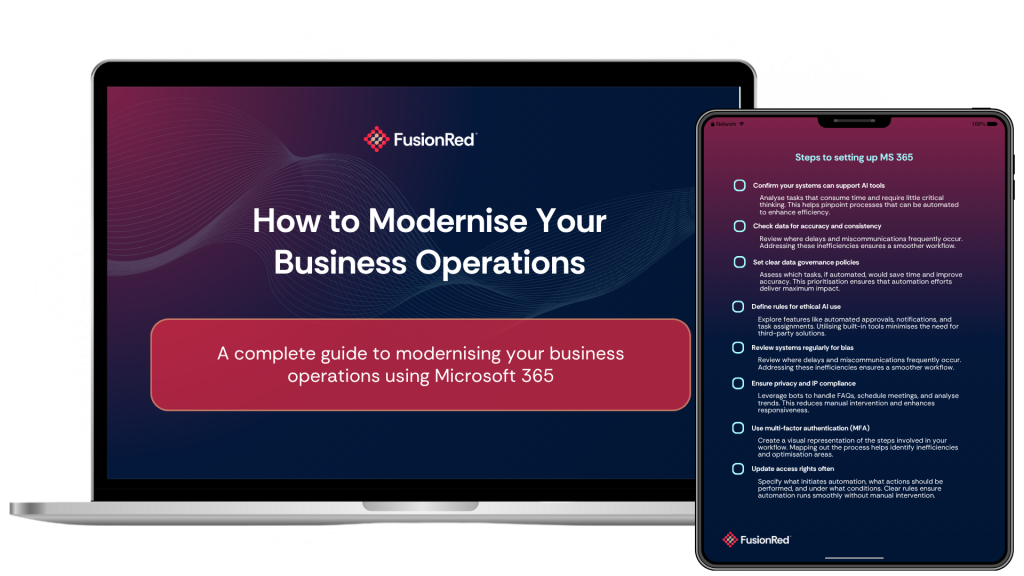
Is your Business Outdated and Left Behind? Modernise Your Business with Confidence Today!
Manual processes, scattered files, clunky systems… It’s holding your business back. Many SMBs feel overwhelmed by “digital transformation”, not knowing where to start or what tools to use.
This guide walks you through exactly how to:
Automate everyday work with Microsoft Copilot
Strengthen security without IT complexity
Align remote and in-office teams with better collaboration
Choose the right Microsoft 365 plan so you don’t overpay
Don’t let outdated systems slow you down. Download your free guide and get clarity on your next steps. Start modernising with confidence today!